

Three key points
- 01
Medical data becomes valuable when a system sees health changing over time, rather than an isolated episode.
- 02
Medical AI should help identify relationships and reduce information overload, leaving decisions to doctors.
- 03
Personalised prevention requires digital health memory: sources, context and an accumulated history.
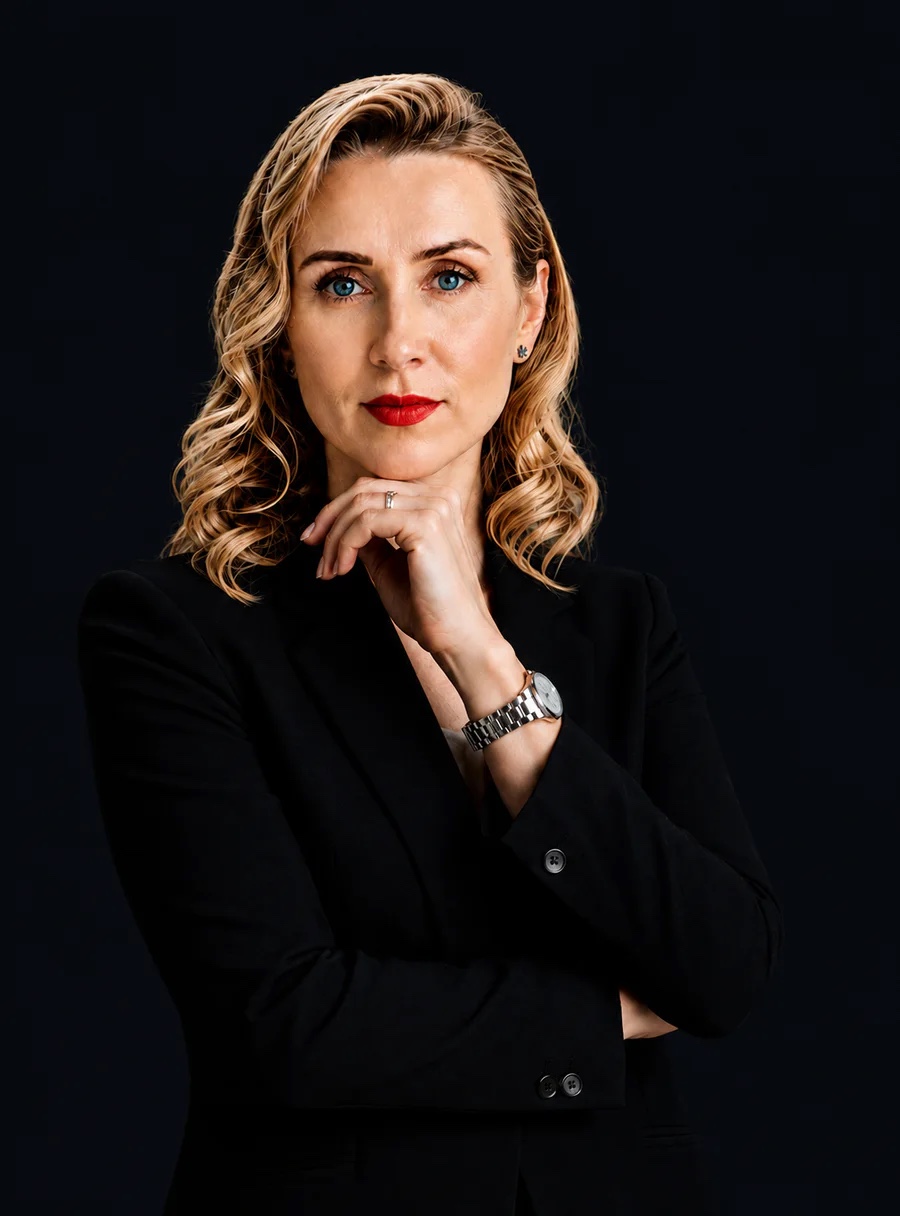
In August 2026, Anna Minakova, founder of ESG Expert, visionary and futures researcher, interviewed BIOS founder and CEO Margarita Pirinen. Their conversation addressed the future of healthcare: personalised and preventive medicine, artificial intelligence, medical data, and the transition from fragmented medical histories to continuous digital health context.
They paid particular attention to how technology could change interactions between doctors and patients, and why the next stage of medical digitalisation concerns not so much accumulating more data as organising, comparing and interpreting it over time.
Digital health memory
From medical records to health memory
Today, one person's health data may be distributed across the information systems of several clinics and laboratories, diagnostic results, wearable devices, medical documents and applications.
According to Margarita Pirinen, the problem in modern medicine is increasingly not a lack of data, but its fragmentation:
‘The body does not exist as separate episodes, yet that is how a person's medical information usually exists today. We see a particular test, appointment or examination. But actual health is a process that unfolds over time.’
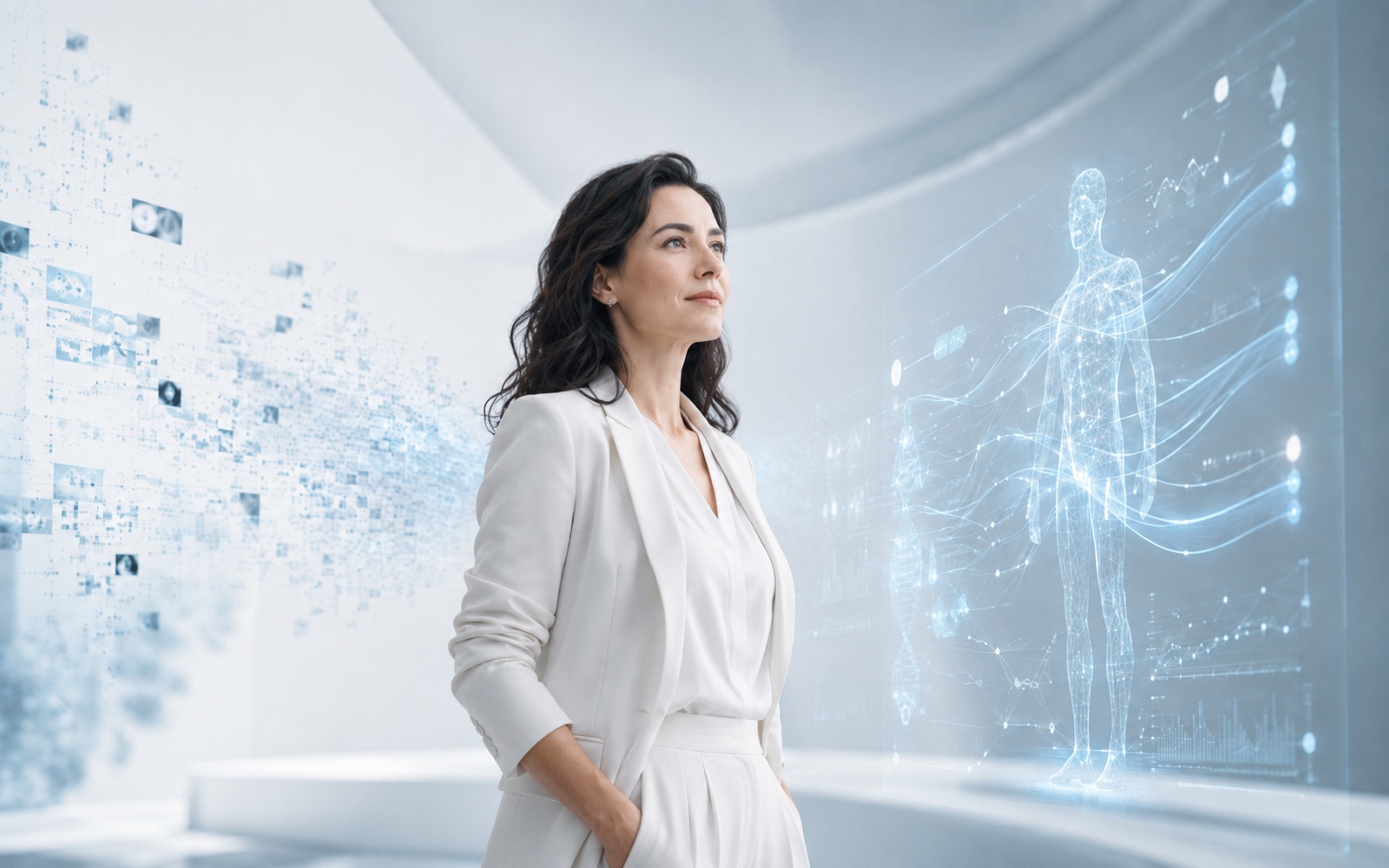
BIOS is built on this principle: an intelligent health management system that brings together medical history, laboratory measurements, medical documents, wearable data and subsequent changes within a single framework.
One of its key elements is Health Memory, a longitudinal digital health history. It preserves not only individual medical events but also the relationships between them.
Margarita explains that this approach changes the unit of analysis: rather than considering a single measurement, the system works with its trajectory, context and combinations with other parameters.
‘For us, it is essential to move from a snapshot of a person's condition to a film. One measurement may look normal today. But if we see how it has changed over the past two years and compare it with other measurements, symptoms and medical history, its informational value is entirely different.’

The role of technology
Artificial intelligence should not replace doctors
The role of artificial intelligence in medicine was a central theme of the interview.
In Margarita's view, the promising model for medical AI is not autonomous diagnosis, but an intelligent layer between large volumes of medical data and the professional making a decision.
AI should not diagnose or prescribe treatment on its own. An effective medical system structures data, analyses changes, identifies potentially significant combinations and produces verifiable observations and hypotheses whose final assessment remains with the doctor.
This approach is consistent with the NTI HealthNet market priorities, which consider medical data and intelligent processing technologies part of a new healthcare infrastructure.
‘I think the question “Will artificial intelligence replace doctors?” is framed incorrectly from the outset. A much more interesting question is how much more a good doctor could see if a machine analysed thousands of parameters, reconstructed the history and searched for complex relationships,’ Margarita reflects.
She says the purpose of such systems is not to put more information in front of doctors, but to reduce information overload and provide structured context for decisions.

The sector agenda
BIOS is developing in line with HealthNet priorities
BIOS's development aligns with several priorities on the strategic technology agenda for healthcare.
The NTI HealthNet roadmap identifies ‘Medical data and intelligent processing technologies’ and ‘Healthy longevity’ among its major healthcare priorities.
In particular, the roadmap calls for specialised AI algorithms and systems for healthcare, clinical decision support, analysis of heterogeneous data and prediction of risks of pathological conditions.
Another priority involves expert systems that consider diverse personal data to generate personalised forecasts and recommendations for improving quality of life and longevity.
‘What matters to us is not so much receiving an assessment as confirmation that our chosen direction fits the sector's broader development. Personalised medicine requires more than digitising documents; it requires working with heterogeneous medical data as a single system,’ Margarita replies.
Infrastructure
The digital profile is becoming part of healthcare infrastructure
A similar direction is reflected in Russia's Long and Active Life national project.
The official national projects portal lists among its initiatives the Health National Digital Platform. Digital profiles are intended to support more effective treatment, disease prevention and patient monitoring. The national project itself emphasises regular examinations, prevention and early detection.
Margarita views the digitisation of medical information as only the first stage of this transformation:
‘A digital profile becomes genuinely valuable not when it simply stores someone's documents, but when its data starts answering questions: what has changed, which changes are connected, and what the doctor or the person should pay attention to.’
The development of such systems may gradually change how people interact with healthcare. Instead of reconstructing their medical and examination history each time, patients gain cumulative context that accompanies them throughout life.
Prevention
From treating disease to managing risk
The interview also explored the global shift in approaches to health and prevention.
UN Sustainable Development Goal 3 — Good Health and Well-being — aims to ensure healthy lives and promote well-being for people of all ages. Its 2030 targets include reducing premature mortality from non-communicable diseases by one third through prevention and treatment, ensuring access to quality health services, supporting research and strengthening healthcare systems' capacity for early warning and health-risk reduction.
According to Margarita, the shift from reacting to established disease towards addressing risks earlier is becoming a key direction in HealthTech:
‘For prevention to be personalised rather than merely declared, we need to understand an individual's trajectory. That requires an accumulated history. We cannot manage risk if we look only at the latest point each time.’
Margarita stresses that technology alone cannot guarantee longer lives or prevent disease. Its task is to provide doctors and patients with better information and context for decisions.

The next stage
From data to the relationships between it
Margarita Pirinen believes that finding new relationships within existing medical information and comparing them with individual patterns and doctors' clinical practice may become one of the most interesting applications of AI in healthcare:
‘We already know how to collect enormous amounts of data. The next technological step is to learn to preserve its meaning over time and see connections that cannot be detected by analysing each event separately.’
BIOS Research is a separate area of the project's development. The concept involves analysing de-identified medical data at population level, finding recurring patterns and generating scientific hypotheses for subsequent testing.
The long-term perspective
Health as a manageable system
In the long term, the BIOS founder sees medicine as infrastructure that brings together patients, doctors, healthcare organisations and diverse data sources around a single digital context of a person's health.
According to Margarita Pirinen, the project's ultimate purpose extends well beyond automating individual medical processes:
‘Healthcare's central task is to make health more manageable. Not to replace the doctor with an algorithm or build another dashboard of measurements, but to turn medical data from an archive of the past into a tool for decisions.’
In her view, the further development of digital medicine will be determined not by how much information healthcare systems can collect, but by the quality of its interpretation.
Moving from individual tests and medical records to longitudinal health histories could underpin a new generation of personalised services, from clinical decision support to early risk detection and continuous support throughout a person's life.
In June, BIOS joined the top 100 of the Academy of Innovators.
The interview with Margarita Pirinen became part of Anna Minakova's series of conversations with entrepreneurs, researchers and technology leaders about future technologies, economic transformation and changes that will shape society in the coming decades.
The central conclusion
Medical data must become a tool for decisions.
Longitudinal health histories could underpin personalised services, support for doctors, earlier work on risks and continuous care.
Margarita Pirinen's profile