

About the paper
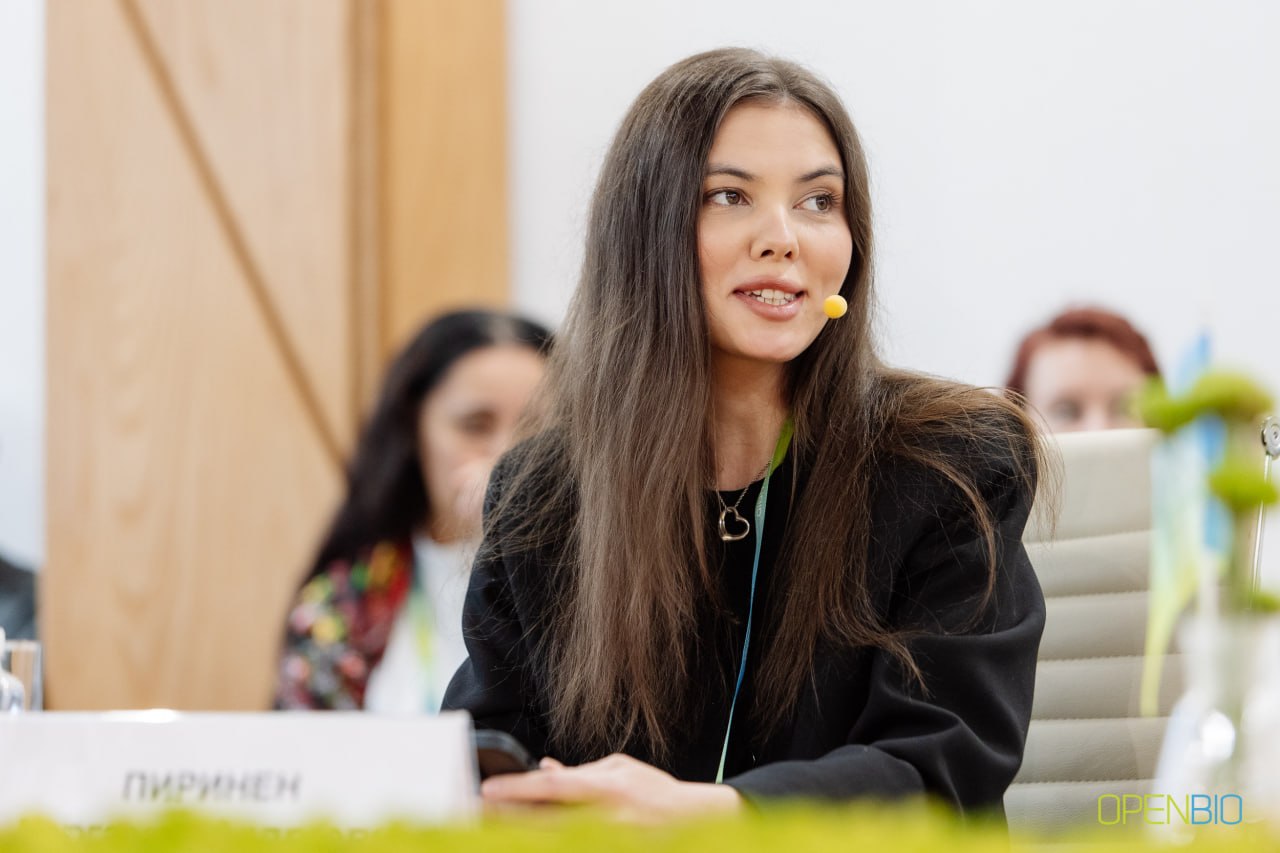
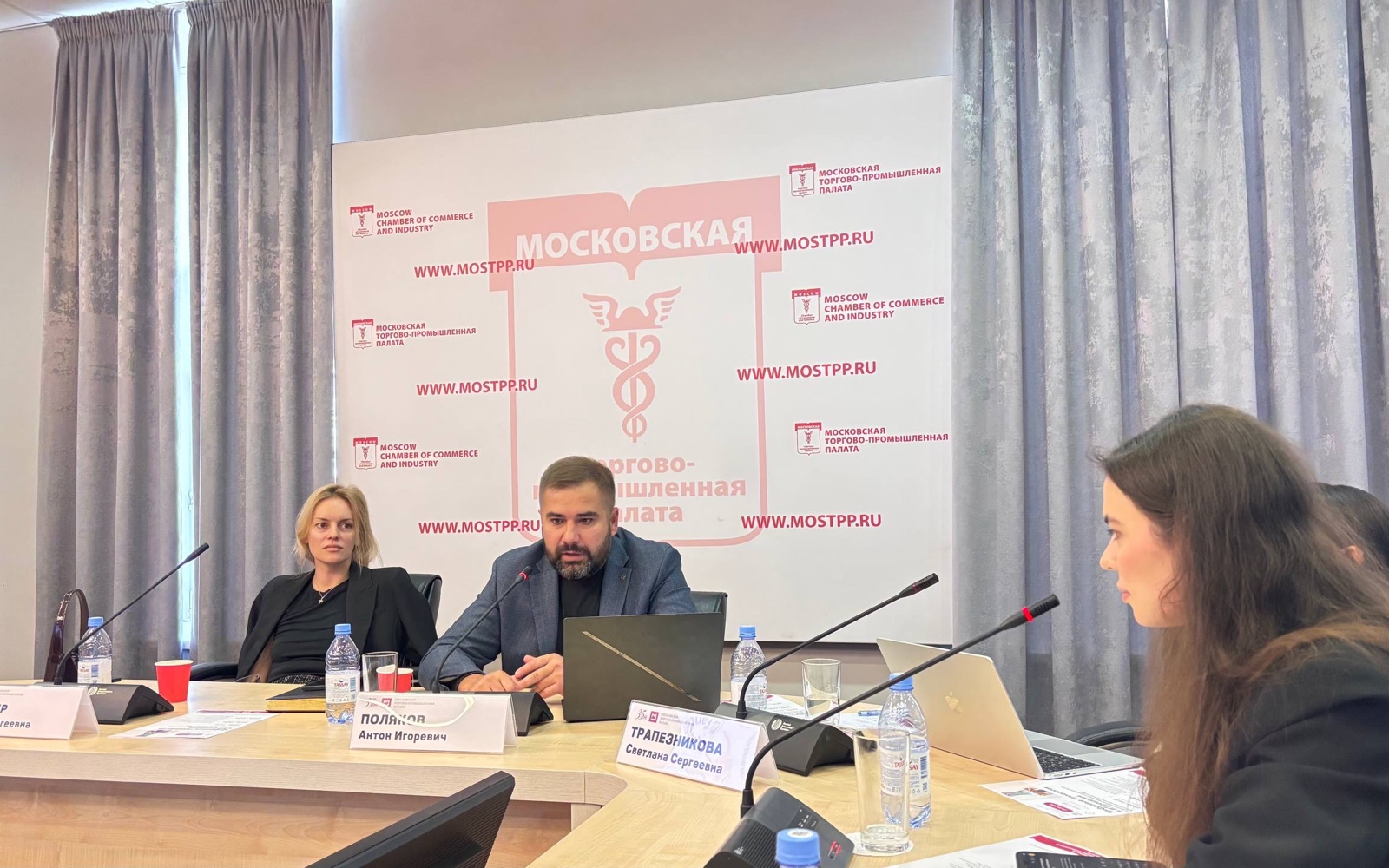
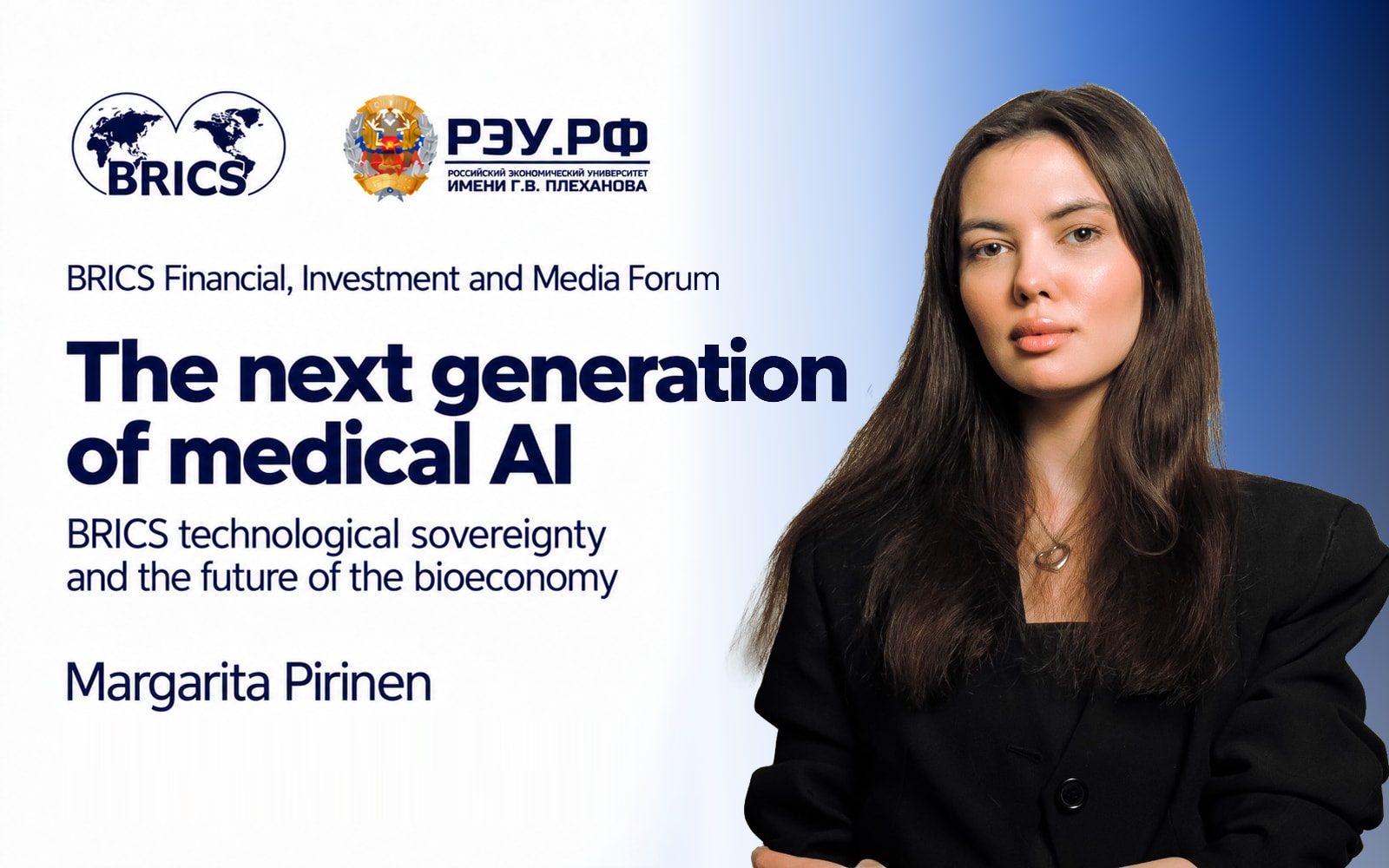
This is the English edition of the paper presented by Margarita Pirinen, founder and CEO of BIOS, at the Second International Financial, Investment and Media Forum of BRICS Countries at Plekhanov Russian University of Economics on 6 October 2026.
The paper was titled “The Next Generation of Medical AI: Technological Sovereignty of BRICS Countries and the Future of the Bioeconomy”.
Its purpose was to show why technological sovereignty cannot be reduced to import substitution, and how an original scientific problem can become a foundation for products, research and integration among BRICS countries. BIOS and the research problem of modelling human health over time provide the practical case.
The paper distinguishes dependence, sovereignty and international integration; compares product scale with technology scale in medical AI; describes three generations of HealthTech; separates the working components of BIOS from research hypotheses; and addresses questions about computational models and the role of large language models.
Three key points
- 01
Technological sovereignty begins when a country can define an original technological problem, rather than merely replace someone else’s product.
- 02
A shared BRICS market matters, but integration requires compatible technologies, common evaluation rules and national control over data.
- 03
BIOS is researching the next level of medical AI: a testable model of an individual’s health state over time.
Three stages
From dependence to sovereignty and integration
This paper comes from a practitioner’s perspective: six years in technology entrepreneurship, twelve years in strategic consulting and work on digital systems for both in-house and client projects. At BIOS, artificial intelligence is treated as a tool, not a panacea. It already performs practical operational tasks, from preparing materials to supporting project workflows through Executive AI, but value comes from the system into which AI is embedded.
The team also develops digital systems with domain experts where there is no ready-made equivalent on the Russian market. That makes the question of environment, capital and international infrastructure practical rather than theoretical: without them, a new technology can remain a local experiment even when an individual product already works.
Technological sovereignty is often reduced to replacing a foreign solution with a domestic one. Such replacement may be necessary, but it can still leave us with someone else’s definition of the problem: another organisation has already decided what the product should be, what it measures and which rules shape the market.
- Dependence. We gain access to an external model, computing infrastructure or open-source component and build our product on top of it.
- Sovereignty. We have our own methods, data, team and evaluation environment, so the technology can be maintained and developed independently of an external supplier.
- Integration. Compatible technologies and agreed rules allow BRICS countries to conduct joint research and create products without surrendering control over data and expertise.
In this framework, technology is not only a way to optimise business or accelerate science. It becomes an instrument of influence and cooperation. BRICS can remain a large market for technologies created elsewhere, or it can establish its own methods, evaluation infrastructure and rules for collaboration.
Sovereignty is not only the ability to replace someone else’s present. It is the ability to formulate your own technological future.
Human potential
Why health is becoming a fundamental technological problem
Technological progress accelerates the pace of life. Yet the ability to learn, work, build companies and sustain long research programmes depends on human health and the length of active life.
Medical AI is therefore more than auxiliary automation for clinics. It sits at the intersection of three objectives: preserving human potential, advancing AI methods themselves and creating new ways to acquire knowledge about living systems.
Medicine forces models to deal with incomplete observations, time, individual baselines and the consequences of interventions. Processing one document well is not enough. A system must understand what changed, what preceded the change and which information is still missing.
BIOS frames its practical goal through healthy longevity: extending the period in which a person can learn, make decisions, develop technologies and complete long-term projects. This connects the medical problem not only to healthcare, but to the future of the knowledge economy.
Scale of the group
BRICS is a market, but a market does not create technology by itself
At the time of the paper, BRICS comprised eleven countries: Brazil, Russia, India, China, South Africa, Saudi Arabia, Egypt, the United Arab Emirates, Ethiopia, Indonesia and Iran. According to India’s 2026 chairship, they accounted for about 49.5% of the world’s population. This creates immense demand, research questions and potential data, but scale becomes an advantage only when participants have their own methods, infrastructure and rules for cooperation.
A selected 2025 slice of Epoch AI’s Notable AI Models database illustrates the gap between countries: 64 models from the United States, 35 from China, two from European developers and no Russian model in that particular subset. These numbers are not a complete inventory of national development; the database applies its own notability criteria. The comparison nevertheless highlights the difference between building a product on an available model and creating a new technological class.
Methodology and current dataset: Epoch AI, Notable AI Models.
International infrastructure
Leadership is not formed inside companies alone
On 22 July 2026, the World Internet Conference established a permanent working group on digital and intelligent healthcare. It brought together more than seventy organisations and experts from technology, science, clinical practice and international institutions. Participants included Huawei, Alibaba, Tencent, Baidu, NVIDIA, Roche, Bayer and Siemens.
This is instructive: technological leadership is built not only through individual products, but through platforms where participants set agendas, conduct research, exchange practices and launch joint projects.
Even an original technology does not become international automatically. Integration requires trusted venues, shared research protocols, clear requirements for data and channels through which a solution can be evaluated and adopted in another country.
Two levels of ambition
A product answers customer demand. A technology creates a new capability
Russian medical AI already operates in real practice. Webiomed, for example, reported that public medical organisations in 42 Russian regions were connected to its services and that fifteen leading medical information systems supported built-in access. This is meaningful deployment of a finished solution.
Product scale, however, differs from the scale of a foundational technology. In 2025, Tempus, AstraZeneca and Pathos announced a multimodal foundation model for oncology. Their agreements included $200 million in data-licensing and model-development fees. Such a model is not limited to one interface: it can support drug research, biomarker work and new diagnostic products.
The capital gap is equally visible. Webiomed reported raising more than RUB 130 million in private investment in 2020. Tempus closed a $70 million Series C in 2017, bringing its total funding at that time to $130 million. These figures do not measure technology quality, but they show how differently resourced teams can be when assembling data, expertise and international infrastructure.
Sources: Webiomed, 22 July 2020; Tempus, 25 September 2017.
Three factors constrain the global growth of Russian solutions:
- The focus of support. Development programmes help domestic deployment but do not always require proof that a technology transfers internationally.
- A narrow comparison set. Comparing a solution only with familiar models can obscure shifts in the global quality frontier.
- Insufficient long-term resources. Foundational technology requires capital not only for near-term sales, but for data, computing, research, validation and international integration.
Both levels are necessary: a working product and long-term technological capability. The mistake is to treat a successful local service as completed technological independence, or to assess foundational research only by its nearest feature.
HealthTech evolution
Three generations of medical systems
The development of medical systems can be understood as three successive generations.
The first generation digitised storage. The second added algorithms that work with individual documents or tasks. The third requires a model that retains the sequence of observations, interventions and changes, and explicitly records uncertainty.
A laboratory value cannot be interpreted outside its context. The same value may carry different meaning depending on a person’s baseline, treatment, measurement conditions and rate of change. A model must therefore retain not only a conclusion, but the boundary of knowledge: what has been measured, what is inferred and what remains unknown.
Diagnosis remains an essential part of medical practice, but it is not sufficient for a computational model of health dynamics. The BIOS hypothesis is that such modelling requires a broader, continuously updated description of the individual over time.
BIOS architecture
One technological core for individuals, doctors, clinics and research
BIOS is built around a connected health history rather than a single conversation with a language model. Each task is handled by a distinct component.
The shared core is intended to support four product modules: Personal for individuals, Doctor for clinicians, Clinic for medical organisations and Research for research teams. A result produced in one context should retain its links to source data and scientific grounds when used in another.
LabSkan extracts and normalises observations. Health Memory connects them to the person, time and source. Evidence Graph preserves the basis and limitations of each conclusion. The research state model must learn to describe how the system changes as new, including incomplete, information appears. This prevents the patient, clinician, clinic and researcher interfaces from creating four incompatible versions of one history.
The economic hypothesis is that a reusable core can reduce repeated training and data preparation for each new product. The stated target is to shorten the learning cycle from years to several months. This is a research-programme target, not a proven result; it must be tested on predefined tasks, datasets and metrics.
What remains to be proved
Longitudinal context and state-transition modelling
The BIOS scientific hypothesis is that observation history and relationships among measurements can be used to describe an individual’s physiological state mathematically and investigate transitions as new information appears.
In 2026, researchers presented PULSE, an approach that uses a patient’s previous multimodal state as context for reconstructing missing data at a current visit. In an evaluation involving about ten thousand UK Biobank participants, the model used 61 laboratory measurements to reconstruct a 251-feature metabolomic profile; seven thousand participants were used for training and three thousand for independent testing.
For modelling transitions, BIOS considers neural operators as one architectural hypothesis. In the original Fourier Neural Operator paper, a trained operator performed some equation-solving tasks in experiments up to three orders of magnitude faster than conventional solvers. That result cannot be transferred mechanically to medicine: accuracy, data requirements, computational cost and transferability between clinics must all be established independently.
Source: Li et al., Fourier Neural Operator for Parametric Partial Differential Equations, ICLR 2021.
Questions and answers
What works today, and where the hypothesis begins
The first direct question after the paper was whether the technology already exists or remains a concept. At the time of the presentation, according to internal BIOS data, 128 people were using Personal; patient and clinician modules were ready; two clinical pilots were under way; and research work was being conducted with two research institutes.
These figures describe product and partnership status on 6 October 2026. They are not results of external clinical validation. The main technological core — data extraction and normalisation, longitudinal memory and work with scientific evidence — is already used in products. The mathematical model of state and dynamics remains a research problem.
Another question concerned a digital twin of DNA, molecular-level modelling and the possible need for quantum computing. The current BIOS programme does not claim to provide a digital twin of a molecule, cell or complete organism. Its starting point is the observable clinical level: histories of tests, examinations, prescriptions, conditions and changes in organs and systems. Links to molecular models are a possible future horizon, not a promised product capability.
Neural operators were discussed as a way to test whether complex dynamics can be modelled from incomplete data at lower computational cost. Results on physical equations demonstrate potential but do not prove applicability to health states. The next step is therefore not a claim of a completed digital twin, but an experimental protocol that defines the state object, data, predicted transitions, baselines and error criteria.
The role of language models
A language model should not be the source of a medical decision
BIOS does not construct a person’s health state inside an external large language model. Extraction, normalisation, longitudinal storage and computational rules must remain in the system’s own controlled environment. The language model is used as a communication interface: it helps explain data structure and formulate a response under defined rules, but it must not replace a verifiable algorithm or a clinician’s decision.
In response to a question from the audience, the team clarified that BIOS is not developing its own large language model. It tests external models, including GigaChat and ChatGPT, for the conversational layer under a common response policy. This allows interfaces to be compared without making them the source of medical memory or computation.
The architecture makes it possible to change language-model providers without losing medical memory or system logic. This is a practical dimension of sovereignty: critical knowledge is not dissolved into a component whose conditions of use are controlled by an external company.
The central conclusion
The future of a market begins with a problem that has not yet appeared in a specification.
Russia and BRICS countries cannot build technological leadership by catching up with finished products alone. We need original scientific problems, evaluation infrastructure and the ability to turn research results into technologies that others can use.
In medical AI, we see such a problem in a testable model of human health over time. BIOS is our contribution to solving it.
Follow Margarita’s updates