

Three key points
- 01
Following Anton Polyakov's presentation, participants discussed the future of interaction between doctors and digital systems, from support tools to the next generation of medical AI.
- 02
Margarita Pirinen identified a central challenge: moving from processing individual documents to studying longitudinal data and a person's condition over time.
- 03
This transition requires addressing data comparability, de-identification and cross-border transfer, while making AI outputs verifiable by a professional.
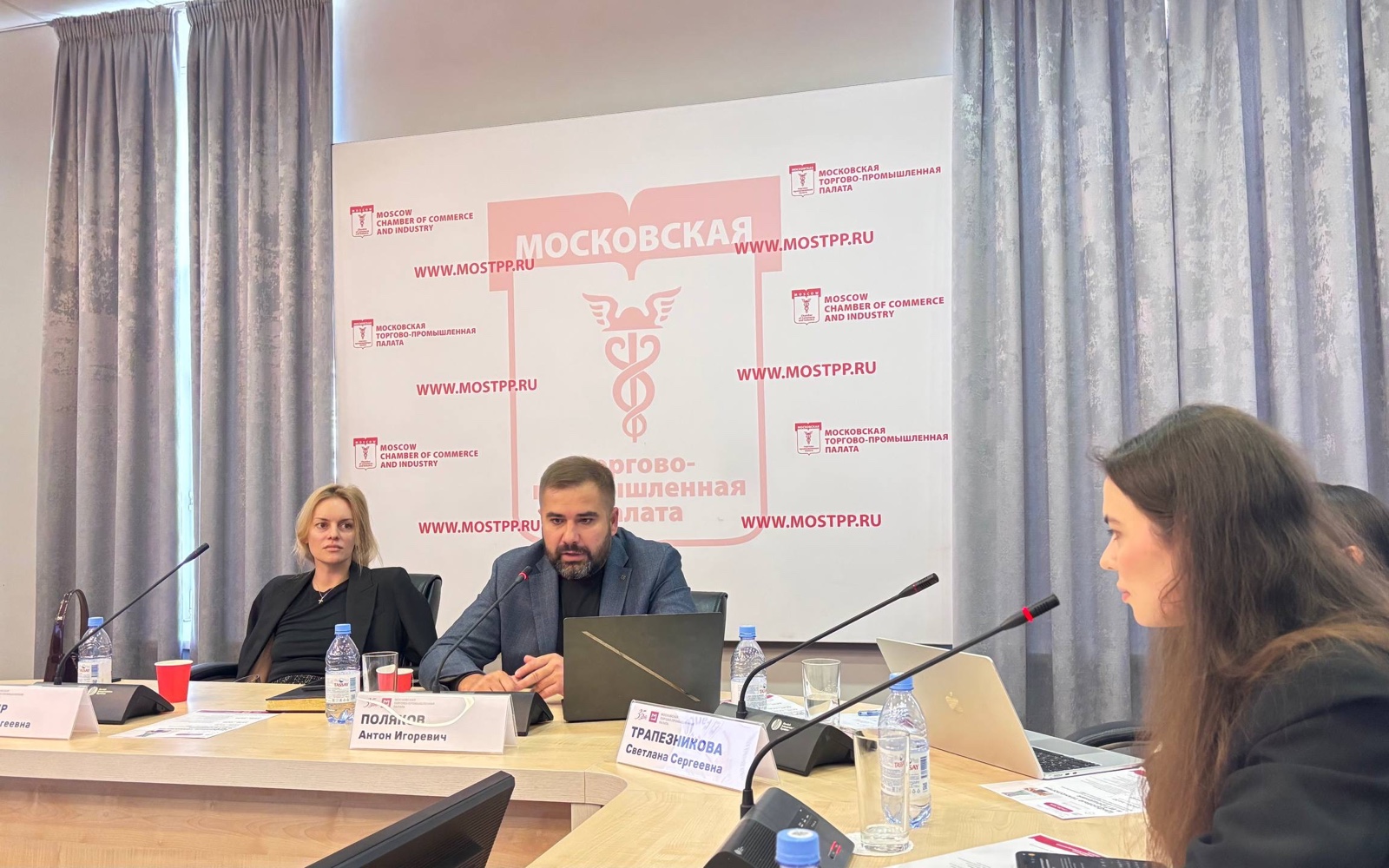
On 9 September, the MCCI Committee for the Development of Preventive, Integrative and Functional Medicine and Nutrition held a round table on digital technologies and IT solutions in preventive medicine. Participants included clinic owners, medical technology developers, education project leaders, an oncologist and other professionals.
Committee chair Anton Polyakov opened the meeting with a presentation on digital tools in preventive medicine and nutrition. He discussed history-taking, processing laboratory data and functional questionnaires, AI applications and digital communication between doctors and patients.
An open discussion followed. BIOS founder and CEO Margarita Pirinen joined the conversation about the future of AI in medicine: its permissible role in decisions, data requirements and opportunities to study health changes over extended periods.
Different perspectives
AI as a doctor's tool — and as the basis for a new research framework
Participants shared a warning against a fully autonomous model that replaces the professional. Anton Polyakov described AI primarily as an information-processing tool: it can accelerate individual operations, but medical decisions must remain human.
Margarita Pirinen agreed that medical oversight is essential, while arguing for a broader view of the technology. She sees AI not as a means of assigning diagnoses automatically, but as a tool for computational, analytical and research work that cannot be done manually across large medical datasets.
This distinction is fundamental: the system does not replace the doctor with a ready-made answer, but helps assemble the basis for a professional decision. It must compare histories, identify persistent changes, expose contradictions and return results with their sources and limitations.
Margarita Pirinen's perspective
Normalisation must preserve the medical meaning of data
Margarita Pirinen raised differences between measurements obtained in different laboratories and countries. The problem is not merely converting units. Comparability is affected by the testing method, reference range, date, source and conditions of observation.
A technically uniform format therefore does not make a dataset medically homogeneous. Normalisation must preserve the provenance and version of every fact, along with the rules used to make it comparable. Otherwise, the system conceals differences that may change a result's meaning.
The BIOS approach treats data as observations of a person's condition, not as the condition itself. A test, symptom or prescription captures only part of the picture. Meaning emerges when these observations are compared with earlier history and other changes over time.
Data and regulation
De-identification and cross-border transfers require separate rules
Participants discussed constraints on the use of models and infrastructure located abroad. A medical product must establish in advance what information is sent to an external provider, where it is processed and whether the recipient can link it back to an individual.
De-identified data creates opportunities for research and training analytical systems, but does not automatically remove all requirements. Anonymisation must be distinguished from pseudonymisation, re-identification risks controlled and permitted uses of the dataset documented.
Margarita Pirinen argues that these rules belong in the product architecture. Localisation, access controls, operation logs and a separate cross-border transfer procedure cannot be added after launch as a formal legal appendix.
The technology's limitations
A large language model is not yet medical intelligence
Part of the conversation addressed models available within Russian infrastructure and their place in medical products. Large language models can parse text, extract information and compose coherent answers. Those abilities alone, however, do not make a medical conclusion evidence-based.
A generative model may lose a fact's provenance, combine incompatible observations or fill a gap with a probable continuation. In an ordinary conversation this looks like an inaccuracy; in medical and research analysis, it can change the meaning of the entire picture.
Margarita Pirinen therefore believes an LLM should be one tool within a controlled system. It can help read and structure documents, but conclusions must rest on formal rules, verifiable sources and expert assessment.
The next generation of AI
From static recommendations to studying a person's condition over time
During the discussion, Margarita Pirinen highlighted another limitation: medical knowledge and guidelines inevitably describe a generalised model, while an individual's condition changes. Treatment, lifestyle, psychological stress, the environment and many other factors act on it simultaneously.
She sees the task of the next generation of digital medical systems as studying longitudinal data. They should not merely compare people with population norms, but recognise their individual trajectories: which measurements changed together, which combinations recurred, where discrepancies arose and what data is missing to test a hypothesis.
This approach also changes the direction of research. Observations accumulated around an individual patient become a starting point for finding reproducible patterns that can then be tested in larger samples. It is a move from individual cases to verifiable knowledge, not an attempt to fit everyone into a predetermined scheme.
BIOS develops this approach through Health Memory and BIOS Intelligence. The former preserves history, versions and data provenance; the latter compares observations over time and generates testable hypotheses with explicit limitations. The result is intended for further professional assessment and is not a diagnosis.
The central conclusion
The future of medical AI lies not in autonomous answers, but in verifiable analysis of change over time.
Technology becomes useful to doctors when it preserves data meaning and provenance, considers individual histories and shows the limits of each result.
Explore BIOS technology